
Choosing the best sunscreen for kids may be challenging. You will find yourself standing in the skincare aisle asking yourself: Which one should I pick: mineral sunscreen or chemical sunscreen? Is SPF 30 sufficient? Are sprays safe? Which active ingredients are kind to sensitive skin?
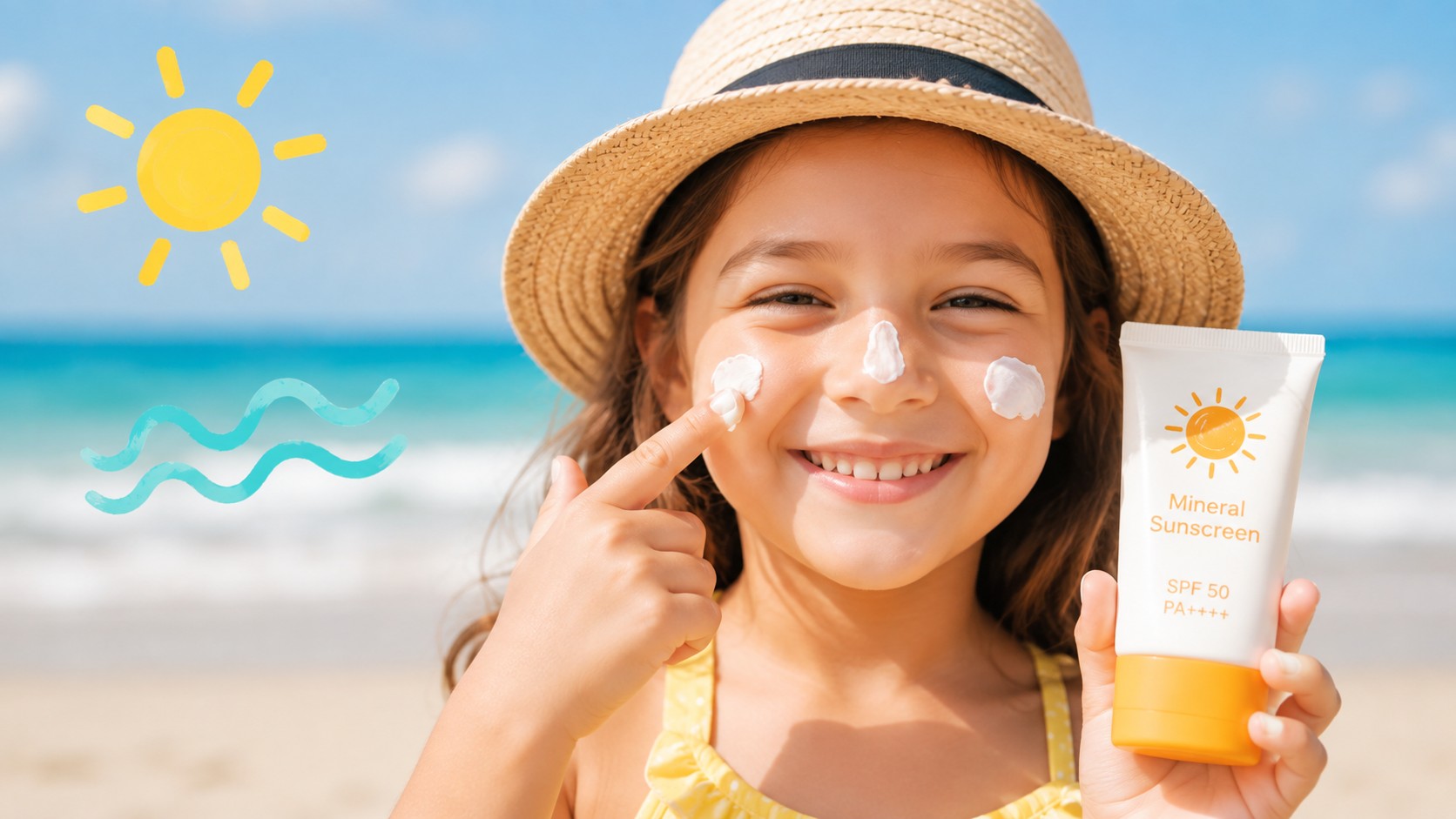
The best sunscreen for kids would be a broad-spectrum sunscreen with an SPF value of 30 or higher, offering protection against UVA and UVB rays. Mineral sunscreens containing either zinc oxide or titanium dioxide have gained popularity among skincare professionals for kids having sensitive skin since these components are relatively unlikely to irritate.
Most children would benefit from using a sunscreen that:
- Is broad-spectrum
- Has an SPF value of 30 or higher
- Is water-resistant
- Lacks fragrance in case of sensitive skin
- Is easy to apply and reapply
In case of babies below six months of age, the primary means of protection from sun exposure would be staying under shade, wearing protective clothing, and avoiding sunlight exposure when possible.
Your children spend a lot of time outside having fun. Although outdoor activities are crucial for proper development, excessive UV radiation may hurt their delicate skin. Using appropriate sunscreen will help protect your children when they are outdoors, at school break time, at sports or on vacation.
An effective sunscreen does not necessarily have to be the most expensive one. An ideal sunscreen is one that offers dependable UV protection, is suitable for your child’s skin and can be applied properly each time.
How We Evaluated Kids’ Sunscreens
Choosing a children’s sunscreen requires more than looking at the SPF number. A product should work well in real family situations.
We considered these factors:
| Evaluation Factor | Why It Matters |
| UV Protection | Helps protect against UVA and UVB rays |
| Ingredients | Gentle formulas are better for sensitive skin |
| Application | Children need sunscreen that parents can apply evenly |
| Texture | Comfortable products are more likely to be used consistently |
| Water Resistance | Important for swimming and active outdoor play |
| Skin Compatibility | Different children may react differently to ingredients |
The most effective sunscreen is the one your child will tolerate and that you can apply properly.
What Is Kids’ Sunscreen and How Does It Work?
The ideal sunscreen for kids would be a broad-spectrum sunscreen with an SPF value of 30 or higher, offering protection against UVA and UVB rays. Mineral sunscreens containing either zinc oxide or titanium dioxide have gained popularity among skincare professionals for kids having sensitive skin since these components are relatively unlikely to irritate.
Most children would benefit from using a sunscreen that:
- Is broad-spectrum
- Has an SPF value of 30 or higher
- Is water-resistant
- Lacks fragrance in case of sensitive skin
- Is easy to apply and reapply
In case of babies below six months of age, the primary means of protection from sun exposure would be staying under shade, wearing protective clothing, and avoiding sunlight exposure when possible.
Mineral vs Chemical Sunscreen: Which Is Better for Kids?
One of the biggest questions parents ask is whether mineral sunscreen or chemical sunscreen is better.
Both can provide sun protection, but they work differently.
| Feature | Mineral Sunscreen | Chemical Sunscreen |
| How it works | Sits on skin and helps block UV rays | Absorbs UV rays and converts them into heat |
| Common ingredients | Zinc oxide, titanium dioxide | Avobenzone and other UV filters |
| Best for | Sensitive skin and younger children | Children who prefer lightweight formulas |
| Texture | Sometimes thicker | Usually lighter |
Many parents searching for the best mineral sunscreen for kids choose zinc oxide formulas because they are gentle and commonly recommended for sensitive skin.
Benefits of Using Sunscreen for Children
Helps Prevent Sunburn
The skin of children burns quickly while engaging in outdoor play. Application of sunscreen regularly decreases the amount of UV rays.
Protects Sensitive Skin
The use of mild products helps prevent damage to the skin.
Builds Healthy Sun Habits
Early learning about sunscreens ensures life-long protection of the skin.
Supports Outdoor Activities
A good sunscreen routine allows children to enjoy:
- Sports
- Swimming
- Outdoor camps
- Playground time
- Family vacations
What Ingredients Should Parents Look For?
When choosing a safe sunscreen for kids, check the label carefully.
Zinc Oxide
Zinc oxide is a type of mineral that is used in sunscreens for babies and those made for sensitive skin.
Titanium Dioxide
A mineral that is often present in gentle sunscreens.
Broad-Spectrum Protection
Make sure you buy sunscreens labeled as “broad spectrum,” as they offer protection against both UVA and UVB rays.
SPF 30 or Higher
The American Academy of Dermatology usually suggests SPF 30 or higher for adequate protection.
Fragrance-Free Options
Fragrance-free products may be preferable for children with sensitive skin.
How Much Sunscreen Should You Apply?
Many parents use too little sunscreen, which reduces protection.
A good rule:
| Area | Application Guide |
| Face and neck | Apply a generous layer |
| Arms and legs | Cover all exposed skin |
| Full body | Around one ounce for larger children |
Apply sunscreen before outdoor exposure and reapply regularly, especially after swimming, sweating, or towel drying.
Lotion, Stick, or Spray: Which Sunscreen Is Best?
Different sunscreen formats work better for different situations.
| Type | Advantages | Best For |
| Lotion | Best overall coverage | Daily use |
| Stick | Easy face application | Nose, cheeks, ears |
| Spray | Quick and convenient | Older active children |
Many parents looking for the best spray sunscreen for kids choose sprays because they are easier for busy mornings. However, sprays should still be applied carefully and rubbed into the skin to avoid missed areas.
Choosing Sunscreen Based on Your Child’s Age
Baby Sunscreen
For babies under six months, experts recommend avoiding direct sun exposure whenever possible and using shade, hats, and protective clothing first.
When sunscreen is necessary, many parents prefer mineral-based baby sunscreen formulas.
Toddler Sunscreen
Toddlers need sunscreen that can handle movement, sweating, and outdoor play. A water-resistant mineral lotion is often a practical option.
School-Age Children
Older children may prefer lightweight lotions, sticks, or sprays that are easier to use independently.
Common Mistakes Parents Make With Sunscreen
Applying Too Little
A thin layer may not provide the protection shown on the bottle.
Forgetting Hidden Areas
Parents often miss:
- Ears
- Back of the neck
- Feet
- Shoulders
- Hands
Not Reapplying
Sunscreen wears away through:
- Swimming
- Sweating
- Toweling off
- Playing
How to Choose the Best Sunscreen for Kids
Before buying, ask these questions:
Does My Child Have Sensitive Skin?
Use mineral-based sunscreen which is fragrance free in case of any irritation.
Will My Child Swim or Sweat?
Use water-resistant sunscreens.
Will My Child Actually Wear It?
Using sunscreen becomes easier when your child uses it.
Is It Easy to Apply?
Ease of application is something parents like about a product.
Conclusion
The most effective sunscreen for children should be one that offers reliable protection while being suitable for the individual skin requirements and daily schedule of your little one.
Opt for sunscreen with broad-spectrum protection factor of 30 or above, mild active ingredients such as zinc oxide and titanium dioxide, and formulations that your child is comfortable wearing. No matter whether you pick mineral-based lotions, sprays, sticks, or some other sunscreen format, regular usage of sunscreen is more important than its format.
Such a sunscreen routine along with protective clothing and shade will allow your kids to spend time outdoors safely.
Most Frequently Asked Questions
What SPF sunscreen is best for kids?
A broad-spectrum sunscreen with SPF 30 or higher is generally recommended for children. citeturn0search8
Is mineral sunscreen safer for children?
Mineral sunscreen containing zinc oxide or titanium dioxide is often preferred for sensitive skin because these ingredients are less likely to irritate some children. citeturn0search0
Can babies use sunscreen?
Babies younger than six months should mainly be protected with shade and clothing. If sunscreen is needed, use gentle options on small exposed areas and follow healthcare guidance. citeturn0search2
How often should kids reapply sunscreen?
Reapply about every two hours and after swimming, sweating, or towel drying. citeturn0search2
Is spray sunscreen good for children?
Yes, spray sunscreen can be convenient, but parents should apply enough product and ensure even coverage.
What is the best sunscreen for sensitive skin?
A fragrance-free mineral sunscreen with zinc oxide is often a good choice for children with sensitive skin.

Hi, I’m Amber. Founder of GlowPicks and a skincare research writer focused on sunscreen education, UV protection, and ingredient analysis. I creates evidence-based guides that help readers make informed skincare decisions using trusted sources and expert recommendations.