
Quick Answer
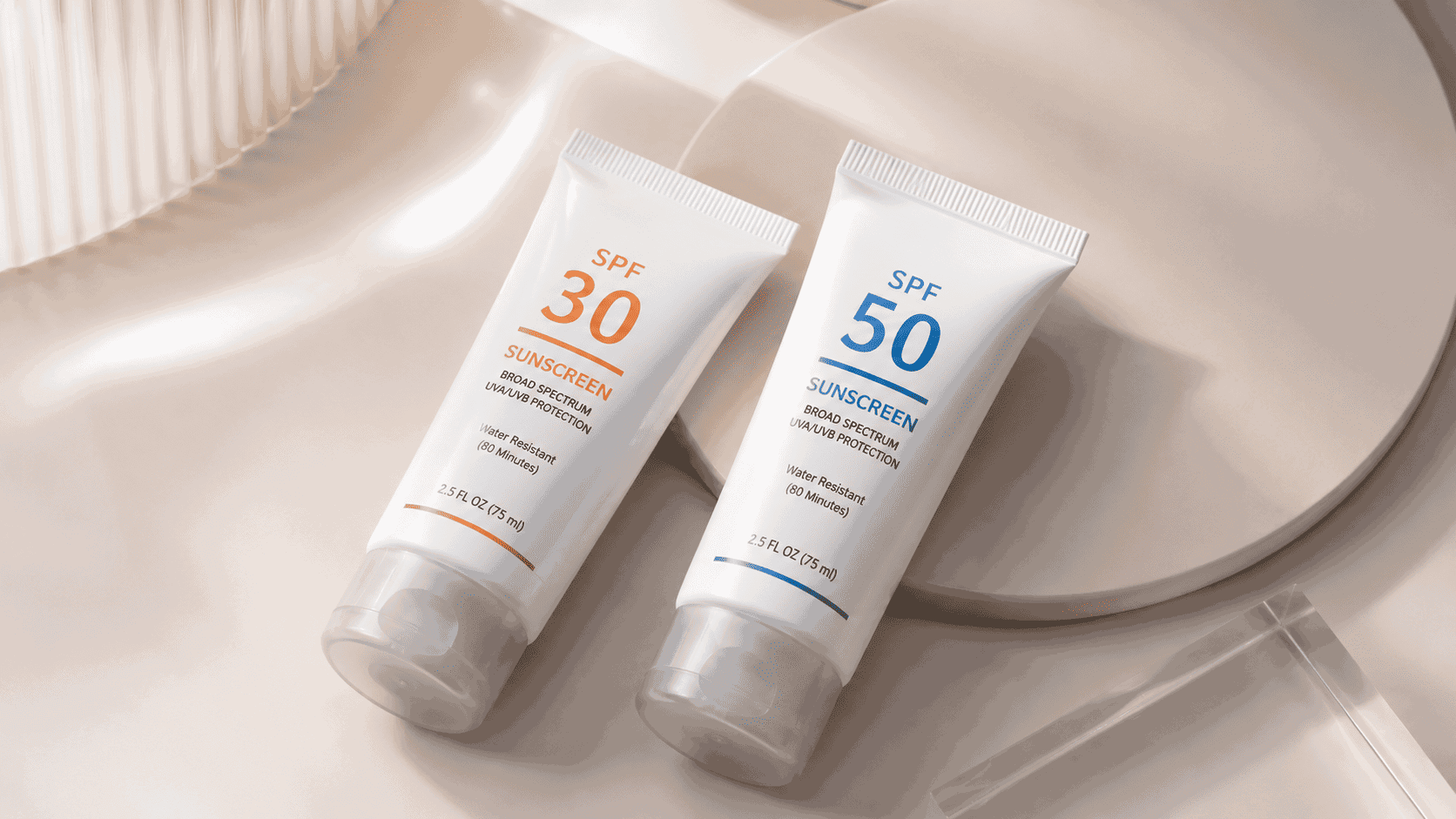
SPF 30 vs SPF 50 is a common sunscreen comparison, but the difference in protection is smaller than many people think. SPF 30 blocks approximately 97% of UVB rays, while SPF 50 blocks about 98%, offering only a slight increase in protection. The effectiveness of any sunscreen depends more on proper application and consistent use than on the SPF number alone.
For the best sun protection:
• Apply the recommended amount of sunscreen.
• Reapply every 2 hours, especially after swimming or sweating.
• Choose a broad-spectrum sunscreen that protects against both UVA and UVB rays.
For daily activities and routine outings, SPF 30 is sufficient for most people. However, SPF 50 is generally a better choice for prolonged outdoor exposure, high UV index conditions, sports, beach days, and individuals with fair or sun-sensitive skin.
Key Takeaways
- SPF 30 blocks ~97% of UVB rays
- SPF 50 blocks ~98% of UVB rays
- No sunscreen blocks 100% UV radiation
- Reapplication is more important than SPF level
- Broad-spectrum sunscreen protects against UVA + UVB
- SPF effectiveness drops if under-applied
- Dermatologists recommend SPF 30+ daily use
What Is SPF?
SPF (Sun Protection Factor) measures how well a sunscreen protects skin from UVB radiation, the primary cause of sunburn and skin damage.
UVB exposure contributes to:
- Sunburn and redness
- DNA skin damage
- Premature aging (photoaging)
- Hyperpigmentation
- Increased risk of skin cancer
💡 Important: SPF does NOT measure UVA protection. For full protection, you need broad-spectrum sunscreen.
SPF Protection Breakdown
| SPF Level | UVB Protection | Real-World Meaning |
| SPF 15 | ~93% | Basic protection |
| SPF 30 | ~97% | Recommended daily minimum |
| SPF 50 | ~98% | High protection |
| SPF 100 | ~99% | Minimal extra benefit |
👉 Insight: The increase in protection becomes smaller as SPF rises.
SPF 30 vs SPF 50: Real Difference Explained
SPF 30 Sunscreen
SPF 30 is designed for everyday, low-to-moderate sun exposure.
Benefits:
- Lightweight feel on skin
- Less greasy texture
- Comfortable under makeup
- Ideal for daily use
Best for:
- Office workers
- Indoor lifestyle
- Short outdoor exposure
- Urban commuting
SPF 50 Sunscreen
SPF 50 is formulated for high UV exposure environments.
Benefits:
- Slightly higher UV protection
- Better for prolonged sun exposure
- More protective margin for sensitive skin
- Ideal for outdoor activities
Best for:
- Beach and swimming
- Hiking and sports
- Outdoor workers
- High UV index regions
Why SPF 50 Feels “Safer” (But Not Twice as Strong)
A major misconception is that SPF 50 is significantly stronger than SPF 30.
In reality:
- SPF 30 → blocks 97% UVB
- SPF 50 → blocks 98% UVB
👉 The difference is only 1%, but SPF 50 provides a buffer zone when sunscreen is not applied correctly.
The Biggest Problem: Under-Application (Critical Insight)
Studies in dermatology show most people apply only 25–50% of the recommended sunscreen amount.
This leads to:
- SPF 50 performing like SPF 30
- SPF 30 performing like SPF 15 or lower
💡 Conclusion: Proper application matters more than SPF rating.
Expert Dermatology Insight
“Sunscreen effectiveness depends more on how it is applied than the SPF number on the bottle.”
— Dermatology Consensus
This is why experts emphasize:
- Full coverage application
- Reapplication every 2 hours
- Broad-spectrum protection
Real-World Case Study: Beach Exposure Scenario
Situation:
Two people spend a full day at the beach (6 hours UV exposure)
Person A (SPF 30)
- Applied once in the morning
- No reapplication
- No protective accessories
Result:
- Moderate sunburn
- Skin redness
- Uneven tanning
Person B (SPF 50)
- Applied SPF 50 correctly
- Reapplied every 2 hours
- Used hat + sunglasses
Result:
- Minimal sun damage
- Healthy skin appearance
- No sunburn
Key Learning:
👉 Sunscreen behavior matters more than SPF number alone.
SPF 30 vs SPF 50 for Different Skin Types
Sensitive Skin
- SPF 50 preferred
- Mineral sunscreen (zinc oxide)
- Fragrance-free formulas
Oily Skin
- Lightweight gel SPF 30 or SPF 50
- Non-comedogenic formulas
- Oil-free sunscreen
Dry Skin
- SPF with hydration (hyaluronic acid, glycerin)
- Cream-based sunscreen
Acne-Prone Skin
- Zinc oxide or niacinamide-based SPF
- Lightweight SPF 30 or SPF 50
Daily Use vs Outdoor Use
SPF 30 is enough for:
- Indoor work
- Short walks
- Driving
- Daily errands
SPF 50 is better for:
- Strong sunlight exposure
- Outdoor sports
- Travel and beach days
- Sensitive skin users
Common Sunscreen Mistakes
Avoid these mistakes:
❌ Using too little sunscreen
❌ Not reapplying every 2 hours
❌ Skipping neck, ears, and hands
❌ Using sunscreen only in summer
❌ Ignoring UVA protection
❌ Assuming SPF lasts all day
How to Choose the Best Sunscreen
Look for:
- ✔ Broad-spectrum protection (UVA + UVB)
- ✔ SPF 30 or SPF 50
- ✔ Water resistance
- ✔ Skin-type compatibility
- ✔ Non-comedogenic formula
- ✔ Dermatologist-tested label
Frequently Asked Questions (FAQ)
Is SPF 50 better than SPF 30?
Yes, but only slightly. SPF 50 offers about 1% more UVB protection.
Can SPF 30 protect skin from cancer?
Yes, when applied correctly and reapplied regularly.
Do I need SPF 50 every day?
Not always. SPF 30 is sufficient for daily indoor exposure.
Does higher SPF mean longer protection?
No. Reapplication is required regardless of SPF level.
What is the best sunscreen for daily use?
A broad-spectrum SPF 30 sunscreen is ideal for most people.
Final Verdict: SPF 30 vs SPF 50
SPF 50 provides a small but useful increase in UV protection, especially in intense sunlight conditions. However, SPF 30 remains highly effective for daily use.
Simple Decision Guide:
- 🏙 Daily routine → SPF 30
- 🏖 Outdoor exposure → SPF 50
- 🌞 Sensitive skin → SPF 50
- ⚖ General balance → SPF 30 or SPF 50 both work if applied correctly
Final Thought
The most important truth in skincare is this:
👉 The best sunscreen is not the highest SPF it is the one you apply correctly every day.

Hi, I’m Amber. Founder of GlowPicks and a skincare research writer focused on sunscreen education, UV protection, and ingredient analysis. I creates evidence-based guides that help readers make informed skincare decisions using trusted sources and expert recommendations.