
Most people have skincare routines with cleansers, moisturizers, and sunscreen for the face, yet there is one thing they frequently miss: the hands.
Consider how much your hands are exposed to sun rays. You are touching the steering wheel when commuting every day, walking your dog in the park, staying close to windows at work or home, and being in the sun whenever you spend some time outdoors. In contrast to your face, your hands are rarely covered up, meaning that they are subjected to the same kind of daily UV exposure.
The use of sunscreen for hands is a good idea in case your hands are often exposed to the sun rays. The broad spectrum sunscreen protects from UVA and UVB, the sun rays which cause sunburns and premature aging and other damage caused by UV light.
Dermatologists recommend broad-spectrum SPF 30 or higher to be applied regularly during exposure to the sun.
Your choice may vary depending on your lifestyle. In case you need to use the product every day, it would be better to choose sunscreen hand lotion or hand lotion with SPF. If you stay outside the whole day, water-resistant sunscreen should be chosen.
This guide will show you why hand sunscreen is necessary, how it works, how to select the right product, and whether you should use a regular sunscreen or hand cream with SPF.
Why Should You Use Sunscreen for Hands?
Your hands could be the first parts of your body where you may have indications of the environment taking its toll. Where you are sure to take care of your face each day, there is a good chance that your hands have undergone similar conditions.
As an aesthetician, you will be hearing the same question from most of your clients: “Why are my hands more aged although I take care of my face?” The main reason for that is that your hands get exposed to sunlight each day without having proper protection.
Your back hands have a thin layer of skin and naturally contain less oil than some other parts. Therefore, hydration and sun protection are essential for you.
Conditions where you might be exposing your hands to UV rays include the following:
Driving with hands visible through windows
- Physical activities outdoors
- Gardening
- Walking on sunny days
- Sitting next to bright windows
- Working outside
Regular use of hand sunscreen would help minimize unnecessary UV exposure.
What Is Sunscreen for Hands?
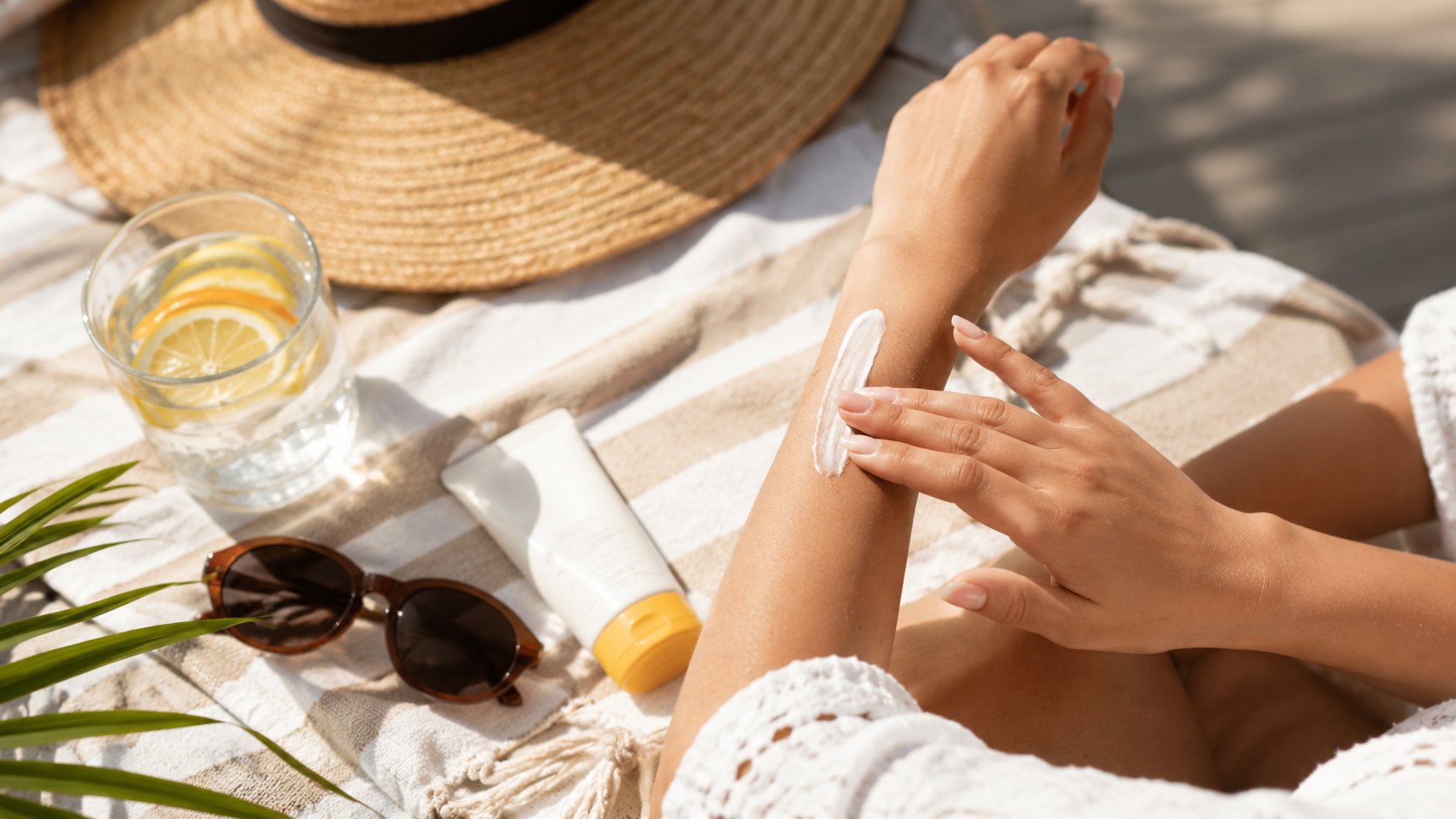
Sunscreen for hands is any SPF product that is applied on the skin on your hands in order to protect it from UV rays. It can be specifically formulated as hand lotion or cream or regular sunscreen product that will be applied on your hands.
As opposed to regular body sunscreen products, hand sunscreen products are usually made with the idea of everyday convenience in mind. Such sunscreens are typically:
- Light
- Quick-absorbing
- Moisturizing
- Less sticky
- Easily reapplied
A proper sun cream for hands has the following purposes:
- Protects your skin from UV rays
- Protects your skin barrier through moisturization
How Does Hand Sunscreen Work?
Sunscreen works by using UV filters that reduce the amount of ultraviolet radiation reaching your skin.
There are two main categories:
| Type of Sunscreen | How It Works | Common Ingredients |
| Mineral sunscreen | Uses mineral filters that sit on the skin and absorb/scatter UV radiation | Zinc Oxide, Titanium Dioxide |
| Chemical sunscreen | Uses organic filters that absorb UV energy and convert it into a small amount of heat | Avobenzone, Octinoxate |
For everyday hand protection, look for:
- Broad spectrum coverage
- SPF 30 or greater
- Comfortable feel
- Moisturizers
- Something you will use
The best sunscreen may not necessarily be the most costly one. Rather, the ideal one would be something that fits into your daily routine and that you will actually wear every day.
Benefits of Using Sunscreen on Hands Daily
1. Helps Protect Against Premature Aging
Skin aging is significantly influenced by sun exposure. UVA rays can penetrate through the skin more deeply and affect the process of collagen and elasticity formation.
Hand cream sun protection will help avoid repetitive exposure to UV rays, which cause:
- Fine lines
- Wrinkles
- Texture unevenness
- Loss of smoothness
2. Helps Reduce the Appearance of Sun Spots
Many individuals begin to develop dark spots on their hands due to prolonged sun exposure.
These dark spots are usually a result of an increase in melanin formation due to UV exposure. Regular application of sunscreen helps in preventing any further sun-induced pigment changes.
3. Keeps Dry Hands Moisturized
While handwashing is an important part of hygiene, excessive handwashing may result in the removal of natural oils and may make skin feel dry.
A moisturizer containing a sunscreen would be beneficial since it would provide both sun protection and hydration.
Important active ingredients include:
- Glycerin
- Ceramides
- Hyaluronic acid
- Shea butter
- Squalane
Hand Cream With SPF vs Regular Sunscreen: Which Is Better?
Others ask if they should purchase a specific hand cream that comes with SPF or just rely on their regular sunscreen.
Both options can work, but the better choice depends on your needs.
| Feature | Hand Cream With SPF | Regular Sunscreen |
| Daily hand use | Excellent | Good |
| Moisturizing benefits | Usually higher | Depends on formula |
| Lightweight feel | Often designed for comfort | Varies |
| Outdoor protection | Good with proper SPF | Often stronger options available |
| Best for dry hands | Yes | Depends on ingredients |
For most people, a non-greasy hand sunscreen is the easiest option because greasy products can make everyday activities uncomfortable.
Who Should Use Hand Sunscreen?
Any individual who is exposed to the sun can use SPF products for their hands.
People Who Drive Daily
Your hands are likely to get constant exposure to sunlight while traveling, particularly through the windows.
Outdoor Workers
Workers like construction workers, gardeners, delivery workers, and other outdoor workers are more likely to be exposed to UV rays.
People Concerned About Aging
If you notice wrinkles, dryness, or uneven tone on your hands, daily SPF can become a useful prevention step.
People With Dry Skin
SPF lotion for hands can replace the normal lotion for your hands.
How to Choose the Best Sunscreen for Hands
Choosing the best sunscreen for hands involves more than selecting a sunscreen that has the highest SPF rating.
Look for Broad-Spectrum Protection
The broad spectrum label denotes that the sunscreen will work to provide protection from both UVA and UVB rays.
Choose SPF 30 or Higher
Most dermatologists recommend at least SPF 30 for daily use.
Pick a Non-Greasy Formula
Given that you use your hands all day long, a thick sunscreen may discourage you from applying it regularly.
Choose one that:
- is lightweight
- absorbs quickly
- has a matte finish
- does not leave an oily feel on the skin
Consider Water Resistance
In case you sweat a lot or swim frequently, then it makes sense to choose water-resistant sunscreens.
But keep in mind that just because it is water resistant, it does not imply that it never needs reapplication.
Best Type of Hand Sunscreen Based on Your Lifestyle
| Your Situation | Best Choice |
| Office worker | Lightweight SPF hand lotion |
| Driver | Daily hand cream with SPF |
| Outdoor activities | Water-resistant sunscreen |
| Dry skin | Moisturizing sunscreen |
| Sensitive skin | Gentle mineral formula |
Common Mistakes When Applying Sunscreen to Hands
Forgetting the Back of Your Hands
Palms are not the main focus. More sun rays fall on the backs of your hands.
Applying Too Little
A small amount of sunscreen might not be as effective as advertised.
Skipping Reapplication After Hand Washing
Frequent washing will make the sunscreen go away from your hands. Therefore, if you have to wash your hands many times throughout the day, applying it again is vital.
Using Only SPF Makeup or Random Moisturizers
Most moisturizers feel good but do not contain enough UV protection without SPF.
How Much Sunscreen Should You Apply to Your Hands?
Apply a sufficient amount to completely cover all areas of your hands, including:
Back of hands
Fingers
Nails
Areas between fingers
Amounts required vary based on product consistency, but what is important is a sufficient covering rather than applying a small amount that will disappear right away.
In case of any outside activity, you have to reapply sunscreens after two hours, after swimming, sweating, etc.
Conclusion:
Your hands do a lot of work and come into contact with the world around you on a daily basis, but they are often neglected in your skin care routine.
To include sunscreen on your hands doesn’t have to be difficult. Pick out a convenient formulation based on your needs, whether it is a light-hand sunscreen, a hand cream with SPF, or even an option that is waterproof.
The best sunscreen is the one that you will use on a consistent basis.
Most Frequently Asked Questions
Can I use regular sunscreen on my hands?
Yes. Regular sunscreen can protect your hands if it provides broad-spectrum SPF protection. However, many people prefer dedicated hand products because they feel lighter and more moisturizing.
Is hand cream with SPF better than normal hand cream?
Yes, because it provides both hydration and UV protection. Normal hand cream helps dryness but does not protect against sunlight.
Should I wear sunscreen on my hands in winter?
Yes. UV exposure happens throughout the year, not only during summer. Your hands can still receive sunlight during colder months.
Does sunscreen help prevent wrinkles on hands?
Sunscreen cannot stop natural aging, but reducing UV exposure may help limit one of the major environmental factors linked with premature skin aging.
What SPF is best for hands?
A broad-spectrum SPF 30 or higher is a practical choice for daily protection. People with higher outdoor exposure may prefer water-resistant formulas.
Should I apply sunscreen after washing my hands?
Yes. Hand washing can remove sunscreen, so reapply when needed, especially if you spend time outdoors.

Hi, I’m Amber. Founder of GlowPicks and a skincare research writer focused on sunscreen education, UV protection, and ingredient analysis. I creates evidence-based guides that help readers make informed skincare decisions using trusted sources and expert recommendations.