
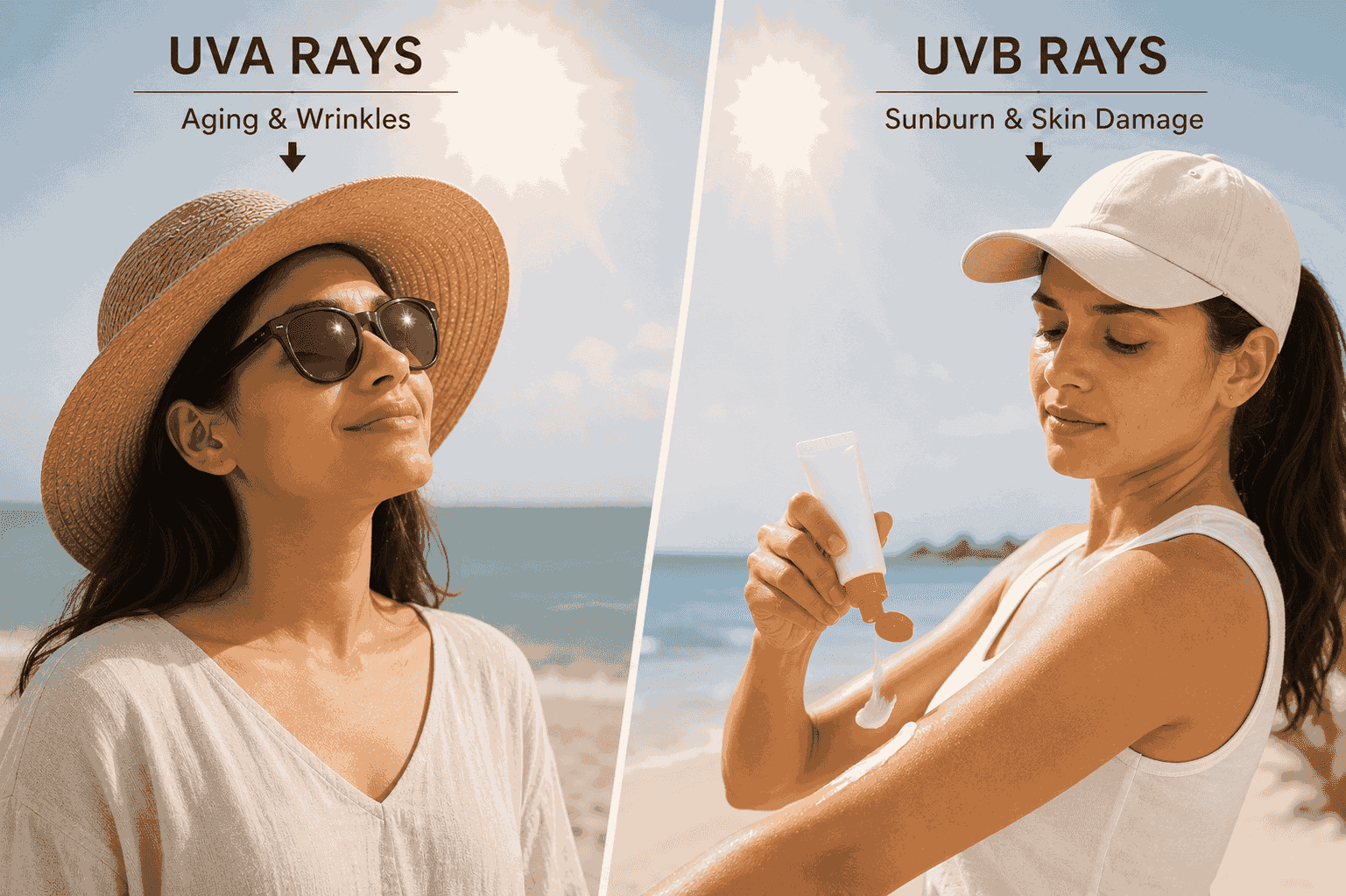
Many people understand that sun exposure can hurt your skin, but don’t know the differences between UVA and UVB Rays. They are both forms of ultraviolet radiation from the sun, and can damage skin in different ways.
In general, UVB are the rays that cause your skin to burn, and UVA are the rays that cause your skin to age. Both UV radiation can damage skin and increase skin cancer risk.
Knowing the difference between UVA and UVB rays can help when applying the best sunscreen and when planning the best sun safety strategy.
What are UV Rays?
UV rays are a type of invisible radiation from the sun that can cause damage to your skin. While you can’t see them, they can cause significant harm to your body.
There are three main types of UV radiation:
– UVA rays
– UVB rays
– UVC rays
Luckily, UVC rays are blocked by the Earth’s ozone layer. The conversation on UVA and UVB rays is concerned mainly with those that contact your skin each day.
Types of UV Radiation
| UV Type | Reaches Earth? | Main Effect |
| UVA | Yes | Skin aging |
| UVB | Yes | Sunburn |
| UVC | No | Blocked by atmosphere |
What Is the Difference Between UVA vs UVB Rays?
The main difference between UVA vs UVB rays is how deep the rays go into the skin.
UVA rays penetrate the skin more deeply than UVB rays. UVB rays burn the upper layer of the skin and cause sunburn. UVA rays cause wrinkles and age spots.
Both UVA and UVB rays cause skin cell damage and increase the risk of skin cancer.
| Feature | UVA Rays | UVB Rays |
| Penetration | Deep skin layers | Surface skin layers |
| Main Effect | Aging | Burning |
| Present All Year | Yes | Mostly stronger in summer |
| Pass Through Glass | Yes | No |
| Cancer Risk | Yes | Yes |
A simple way to remember it is:
- A = Aging
- B = Burning
What Are UVA Rays?
UVA rays account for about 95% of the UV radiation on Earth. UVA rays penetrate the dermis where elastin and collagen are housed. UVA rays harm those proteins, and because of that, damage caused by those rays results in the visible signs of aging.
UVA and UVB rays are different in that UVB rays are the strongest in the summer, while UVA rays are constant throughout the year. UVA rays can penetrate glass, so when you are driving or sitting near the sun, you’re being exposed to UVA rays.
Effects of UVA Rays
- Fine lines
- Wrinkles
- Sagging skin
- Age spots
- Uneven skin tone
- Premature aging
What Are UVB Rays?
While a smaller portion of sunlight is UVB rays, they are more powerful than UVA rays.
UVB rays are typically the cause of sunburn. Because they damage the outer layer of skin, they are the most potent during summer months and the middle of the day.
Of all the UV rays, UVB rays are the most damaging. They can cause mutations in skin cell DNA that can lead to skin cancer.
Effects of UVB Rays
- Sunburn
- Skin redness
- Inflammation
- Blistering
- DNA damage
- Increased cancer risk
Which Is More Dangerous: UVA or UVB Rays?
One common question people have is, what is worse, UVA or UVB rays?Neither are better or worse, as both rays present differing threats.
UVA rays pass through window glass and contribute to wrinkles, fine lines, and age spots.”
— Dr. Klint Peebles, Dermatologist
The danger of UVA rays is that over the span of years they cause skin to develop wrinkles and age prematurely, with the damage happening almost unnoticed. While UVB rays cause immediate skin damage that results in sunburns and mutations to skin cell DNA.
Both UVA and UVB rays of UV radiation require that skin be protected from both.
| Type of Damage | UVA | UVB |
| Wrinkles | Yes | No |
| Sunburn | No | Yes |
| DNA Damage | Yes | Yes |
| Skin Cancer Risk | Yes | Yes |
Can UVA and UVB Rays Cause Skin Cancer?
Yes,Both UVA and UVB radiation have negative effects that may be contributors to skin cancer. While UVB rays damage skin cell DNA directly, UVA rays create oxidative stress that damage skin cells indirectly.
Years of unprotected sun exposure will increase the likelihood of developing skin cancer.
Melanoma
Basal cell carcinoma
Squamous cell carcinoma
Ultimately, this supports why dermatologists recommend sun protection every day..
Case Study #1: Daily Sunscreen Use Slows Skin Aging
Brief Case Study
A landmark Australian study followed more than 900 adults over a period of 4.5 years. Researchers found that participants who applied sunscreen daily showed 24% less skin aging compared to those who used sunscreen only occasionally.
The study demonstrated that consistent protection from UVA and UVB rays can significantly reduce visible signs of aging, including wrinkles, rough texture, and pigmentation.
Key Takeaway: Daily sunscreen use doesn’t just prevent sunburn it can slow down visible skin aging.
Can UVA Rays Pass Through Windows?
One of the most interesting aspects of UVA vs UVB Rays is how UVA can penetrate glass.Because of this, you can be affected by UV exposure in the following situations:
While you are driving.
While you are sitting next to office windows.
While you are working next to windows at home.
Even though UVB rays are blocked by regular glass, UVA can still be absorbed by your skin.
Does Sunscreen Protect Against UVA and UVB Rays?
Yes, as long as the sunscreen says Broad-Spectrum.Broad-spectrum sunscreen protects against both UVA and UVB rays.
- When selecting sunscreen, look for:
- SPF 30 or more
- Broad-spectrum
- Water-resistant if necessary
“Using sunscreen on a daily basis is critical to protect skin cells from UV damage.”
— Dr. Evelyn Jones, Dermatologist
What SPF Protects Against
| SPF | UVB Protection |
| SPF 15 | 93% |
| SPF 30 | 97% |
| SPF 50 | 98% |
Remember that SPF mainly measures UVB protection. Broad-spectrum labeling indicates additional UVA protection.
How Can You Protect Yourself from UVA and UVB Rays?
A solid sun protection routine includes more than just sunscreen.
To ensure your skin is best protected against UVA and UVB rays, practice these habits:
Apply sunscreen every day
Reapply every two hours if spending time outside
Wear UV protected sunglasses
Wear a wide-brimmed hat
Stay in shade when the sun is the highest
Never use tanning beds
These habits can greatly decrease skin damage over time.
Key Takeaways
- UVA vs UVB Rays affect the skin differently, but both can cause long-term damage.
- UVA rays penetrate deeper into the skin and are the main cause of wrinkles, fine lines, and premature aging.
- UVB rays primarily affect the outer layer of the skin and are responsible for sunburn and direct DNA damage.
- Both UVA and UVB rays can increase the risk of skin cancer.
- UVA rays can pass through windows, while UVB rays are mostly blocked by glass.
- A broad-spectrum sunscreen helps protect against both UVA and UVB radiation.
- Daily sunscreen use is one of the most effective ways to prevent UV-related skin damage.
- Wearing protective clothing, sunglasses, and seeking shade can further reduce UV exposure.
- Understanding UVA vs UVB Rays helps you choose the right sun protection products.
- Consistent sun protection today can help maintain healthier skin in the future.
Final Thoughts
It is important for people to understand the difference between UVA and UVB rays to be sure they are taking the best care of their skin. UVA rays cause skin to age, while UVB rays are responsible for burning. Long-term exposure to both will damage skin and heighten cancer risk.
The best way to protect yourself is to use broad-spectrum sunscreen. This, in addition to sun-protective clothing, and remaining cautious of how much sun exposure you are getting, is critical. There are small daily practices you can do to dramatically improve the health of your skin and maintain its youthfulness.
Common Myths About UVA vs UVB Rays
Many misconceptions still exist about UV exposure.
Myth: You only need sunscreen in summer.
Fact: UVA rays are present throughout the year.
Myth: Dark skin doesn’t need sunscreen.
Fact: All skin tones can experience UV damage.
Myth: A tan protects your skin.
Fact: A tan is actually a sign of skin damage.
Myth: Clouds block UV rays.
Fact: Many UV rays can still penetrate clouds.
Frequently Asked Questions
What is the main difference between UVA vs UVB Rays?
UVA rays cause skin aging, while UVB rays cause sunburn. Both can increase skin cancer risk.
Do UVA rays cause wrinkles?
Yes. UVA rays damage collagen and elastin, leading to wrinkles and sagging skin.
Do UVB rays cause skin cancer?
Yes. UVB rays directly damage DNA and are strongly linked to skin cancer.
Can UVA rays go through windows?
Yes. UVA rays can penetrate glass and reach your skin indoors.
Does sunscreen block both UVA and UVB rays?
Broad-spectrum sunscreen protects against both UVA and UVB radiation.

Hi, I’m Amber. Founder of GlowPicks and a skincare research writer focused on sunscreen education, UV protection, and ingredient analysis. I creates evidence-based guides that help readers make informed skincare decisions using trusted sources and expert recommendations.